The method · 03
From still to motion
Every shot starts as a still. Motion comes second.
Stills first
Each shot was designed as one still image, reviewed, and only then animated. A still costs a fraction of a video clip, so the look is settled where mistakes are cheap.
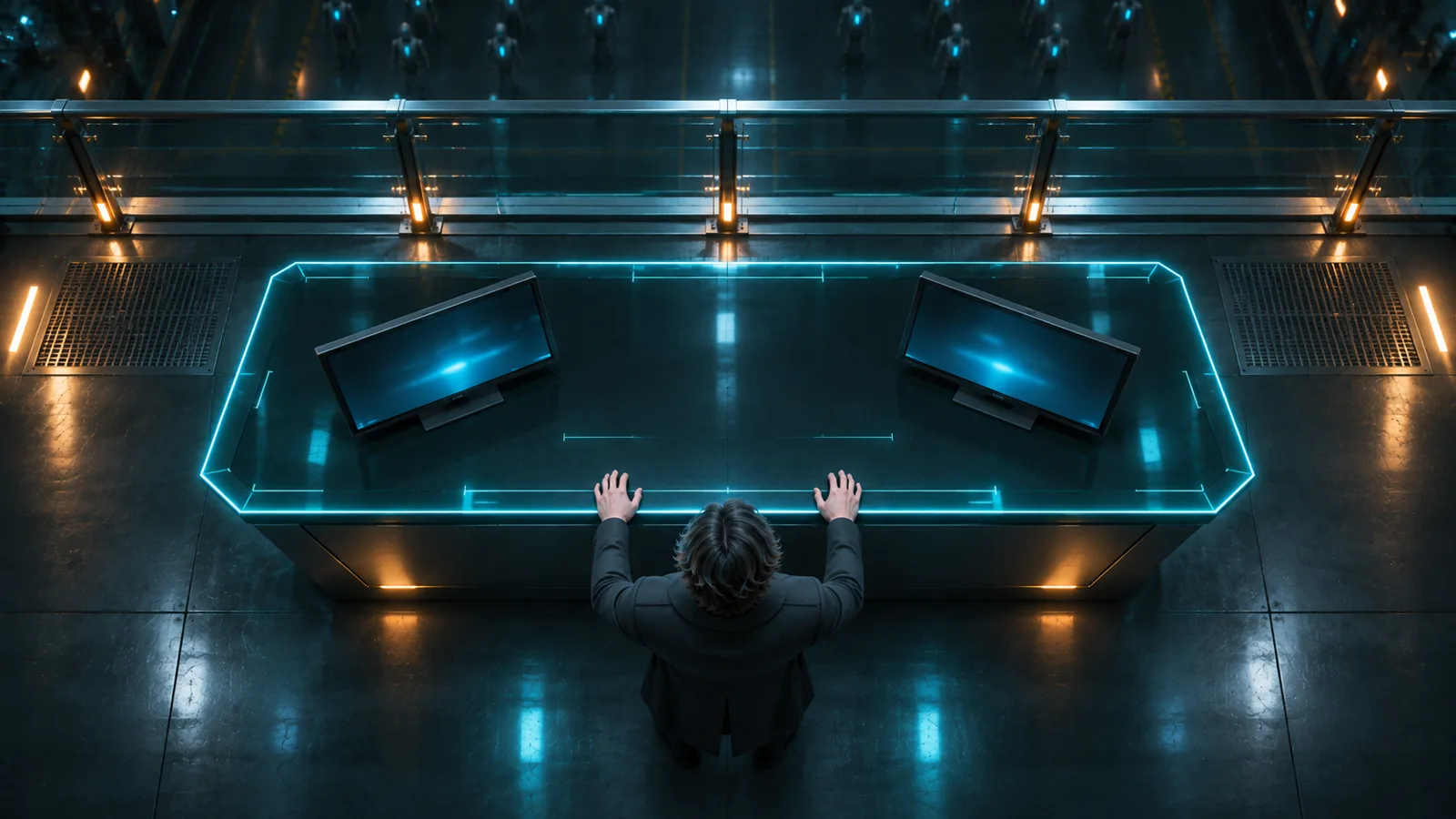
First and last frame
The video model is given a first frame and, where the shot must land somewhere exact, a last frame. Between the two it invents the motion. Continuation shots start on the previous clip's own last frame, so nothing jumps.
Lip-sync, measured
Shots where Lex sings are generated against the real vocal, so the mouth follows the song. Sync is measured as a number on the finished film, shot by shot, and compared with the source clip: if both agree, the edit kept the sync.
Cheap first
Takes are made at a low resolution first, and only the chosen ones are re-rendered at 2K for the final film.